

The margin you lose in billing is margin you already earned.
Hours that never reach an invoice. A rate increase applied a week after its effective date. Overtime lost across two cost centers. An approved pass-through nobody billed. None of it is anyone's mistake — and all of it is yours.
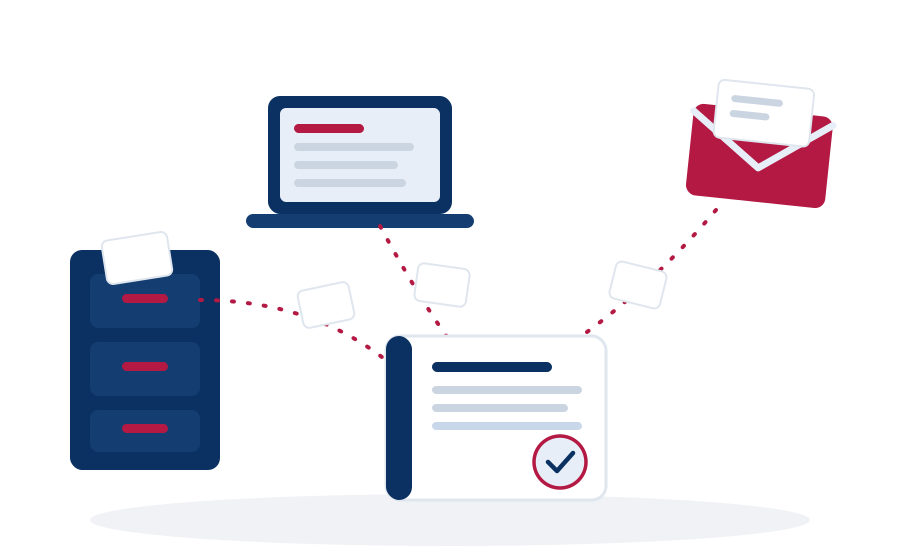
Four correct systems, one incorrect invoice.
Every leak below survives review because nothing is visibly wrong on the invoice. What is wrong sits in the records behind it.
Rate changes that arrive late
An amendment takes effect on the 17th. The billing system is still carrying the old rate on the 21st — across every assignment on that rate line.
Overtime split across cost centers
Forty-six hours on two timecards — twenty-eight and eighteen. Neither one crosses forty, so neither triggers overtime. It is worked, it is approved, and it is never billed.
Pass-throughs that never appear
PPE, boot allowances, travel, per-diem — approved in the assignment record and invisible to any check that only reads the invoice, because they are not on it.
Credits and rebills done by hand
A manual correction reissued under pressure at month end, reconciled against nothing, and never checked again against what was originally billed.
Nothing you own is responsible for the gaps between what you own.
Your ERP is right about what it holds. So is your VMS, your timecard system and your rate card. Each is correct in isolation. AmountGuard reads across all four.
- Agreement & rate card — bill rates by role and shift, with effective datesRecord A
- Assignment records — placements, rate lines and approved pass-throughsRecord B
- Approved timecards — hours signed off by the client, per cost centerRecord C
- Prior billing — what was already invoiced, credited or rebilledRecord D
Every line gets one disposition. The third one matters most.
Clean
The line reconciles to the records that authorize it. Most lines land here, and saying so plainly is part of the work.
Exception
The line does not match its evidence — with a reproducible calculation and a named evidence chain behind every difference.
Unresolved
The evidence needed to judge the line is not present, so it routes to a person rather than a guess. A tool that explains everything is a tool that wastes your week.
Clean + exception + unresolved reconciles to the invoiced total, with no double counting. That reconciliation is the deliverable, whether or not anything is found.
Start with a fictional invoice, not your data.
The first conversation asks nothing of you — no documents, no exports, no integration, no credentials, no access.
Demonstration data
What AmountGuard does not do.
One question is worth 20 minutes.
Does the way this breaks look like the way yours breaks?